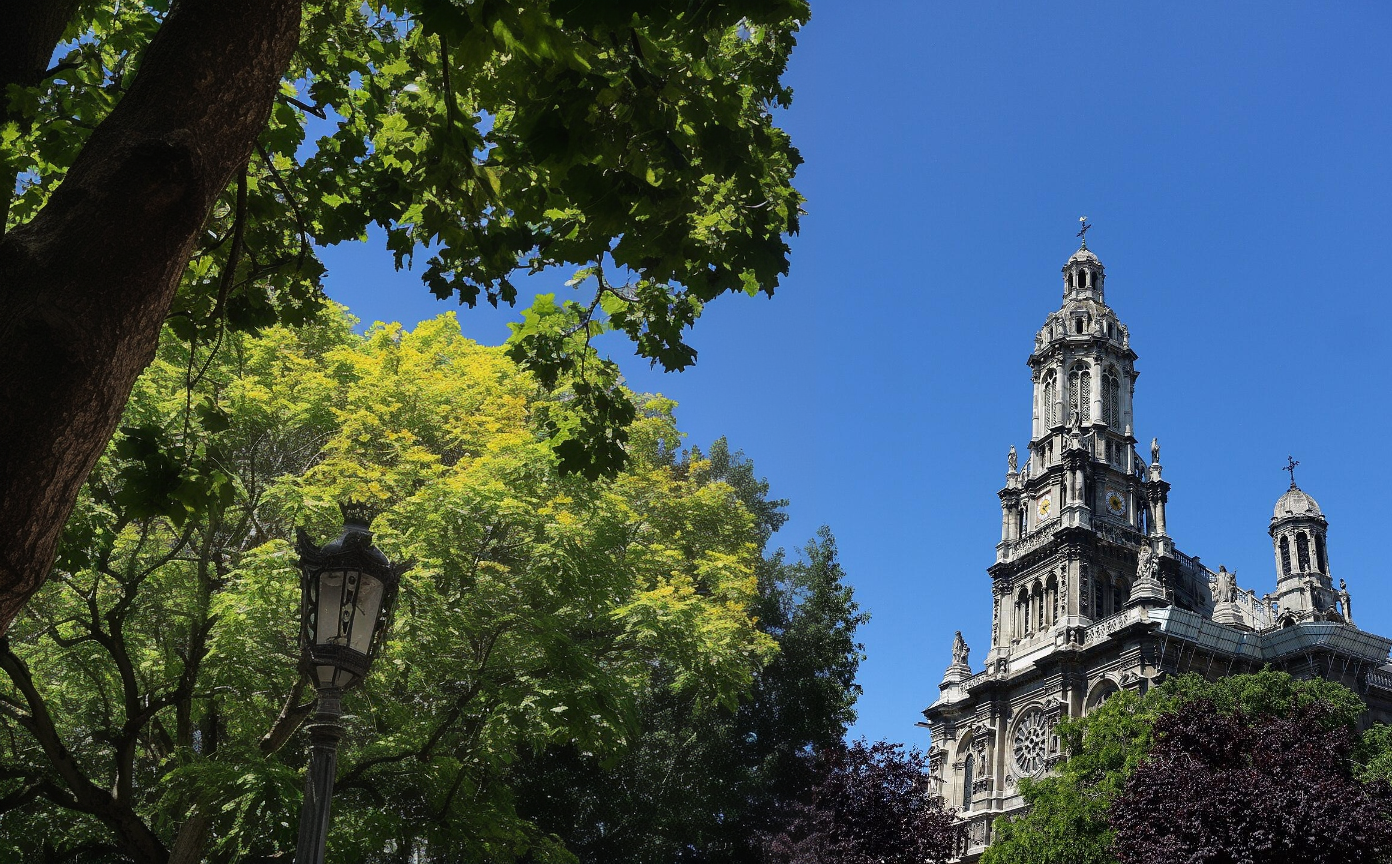
Church of Sainte-Trinité
Explore the Church of Sainte-Trinité, a landmark of Haussmann’s Paris in an eclectic Neo-Renaissance style.
ile-de-france paris-9haussmannsecond-empirearchitecture-eclectiqueolivier-messiaen
Visit description
Built under the Second Empire in the heart of “New Paris”, the Church of Sainte‑Trinité majestically closes the perspective of the Chaussée d’Antin. Designed by Théodore Ballu, it embodies the splendour of the era with its eclectic architecture and technical innovations, hiding a metal framework beneath carved stone.
A place of worship for the industrial bourgeoisie of the 19th century, it is also a major musical venue inseparable from the composer Olivier Messiaen, who served as organist here for 60 years. Its porch—designed to receive horse-drawn carriages—and its richly decorated interior tell the story of a neighbourhood in full swing.
Visit plan
Step 1: Architecture for Haussmann’s Paris
Admire the sumptuous façade and the carriage-accessible porch—symbols of Second Empire modernity.
Step 2: The nave
Enter the vast 20-metre-wide nave, flooded with natural light thanks to clear-glass windows.
Step 3: The monumental choir
Contemplate the raised choir, like a sacred theatre stage, and its modern gilded-bronze altar.
Step 4: The choir arch
Look up at Félix Barrias’s masterful painting at the top of the arch, illustrating the mystery of the Trinity.
Step 5: The Chapel of the Virgin
Step into the intimate space behind the choir, decorated with colourful stained glass and scenes from Mary’s life.
Step 6: The grand organ
Discover the legendary Aristide Cavaillé‑Coll instrument on which Olivier Messiaen composed his major works.
Step 7: The side chapels
Walk through chapels decorated with marouflaged paintings, including the baptismal chapel and the Sacred Heart chapel.
Step 8: The Saints of Paris
Observe chapels dedicated to Saint Denis, Saint Geneviève, and the souls in Purgatory—echoes of the 1870 siege.
Step 9: The façade and its symbolism
As you leave, note the omnipresence of the number three on the façade and the statues of the theological virtues.