Romanesque, Gothic, Classical: Deciphering a Church at a Glance
A jargon-free guide to recognizing the major styles of religious architecture in France, from Romanesque to neo-Byzantine.
architectureromanesquegothicneo-gothicneo-byzantineclassicism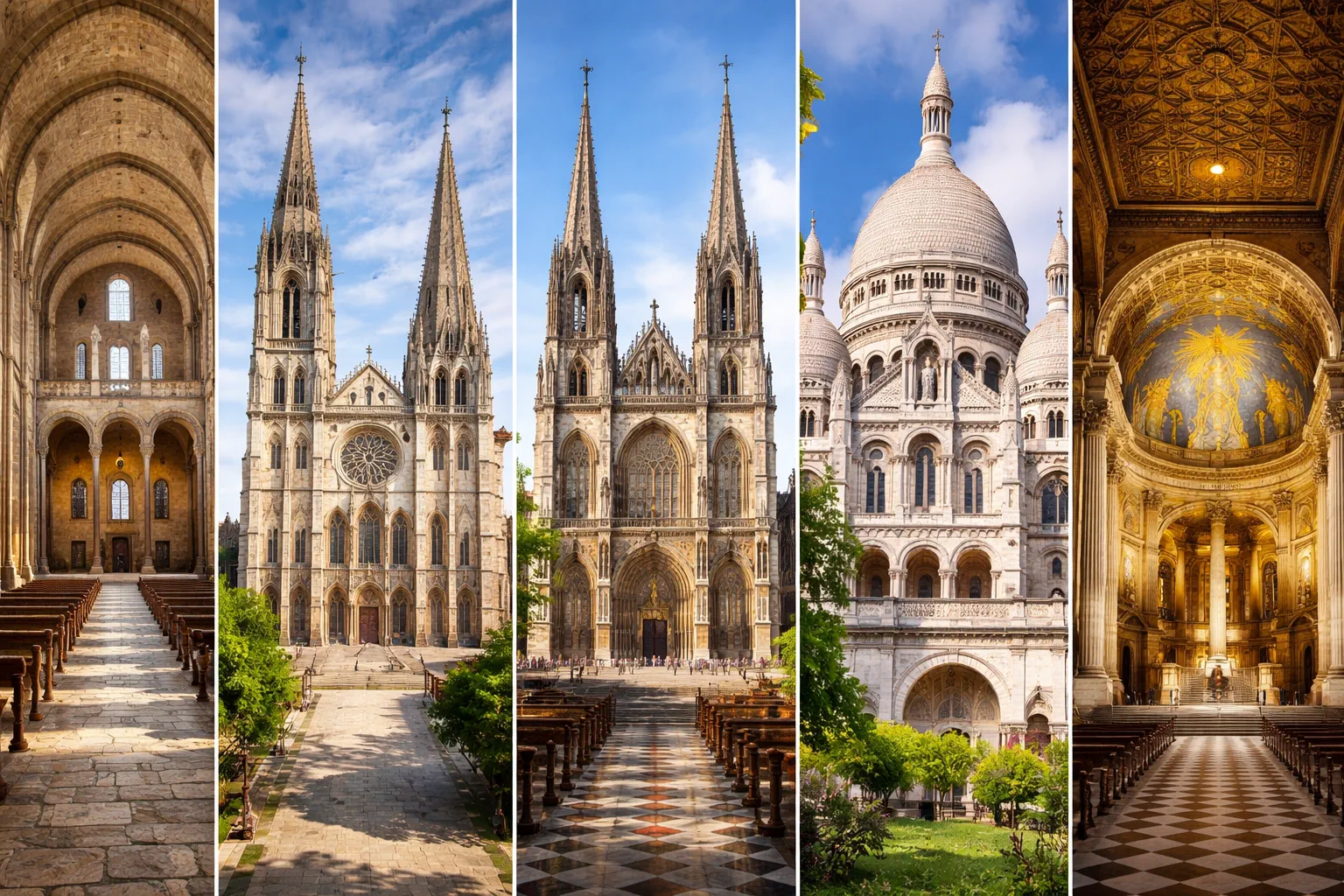
Romanesque, Gothic, Classical: Deciphering a Church at a Glance
You push open a church door and wonder what lies behind these stone walls. Romanesque or Gothic? Medieval or 19th century? Architectural styles seem reserved for specialists, yet a few simple landmarks are enough to understand what you’re looking at.
Here’s a practical guide to recognizing the major families of religious architecture in France, without unnecessary jargon. With these keys in hand, every visit becomes a reading of the past.
Romanesque: Walls Built to Last
Romanesque architecture was born between the 10th and 12th centuries, during a troubled period when churches also served as refuges. The watchword can be summed up in one word: solidity. Builders stacked massive stones, made few openings, and created spaces that seem carved from rock.
The signs don’t lie. Walls are often more than a meter thick. Windows remain small and rare. Arches form perfect semicircles, what’s called the round arch. Inside, the barrel vault crushes the space under its weight. Light is scarce, almost mystical in its parsimony.
Look at the pillars: they’re stocky, short, planted like tree trunks. Nothing soars toward the sky. Everything remains anchored to the ground. This architecture reflects an era that sought first to protect, to endure, to hold out against invasions and pillaging.
The Basilica of Sainte-Marie-Madeleine in Vézelay embodies this quiet strength. Its successive naves envelop you in a calculated semi-darkness, where each ray of light takes on sacred value.
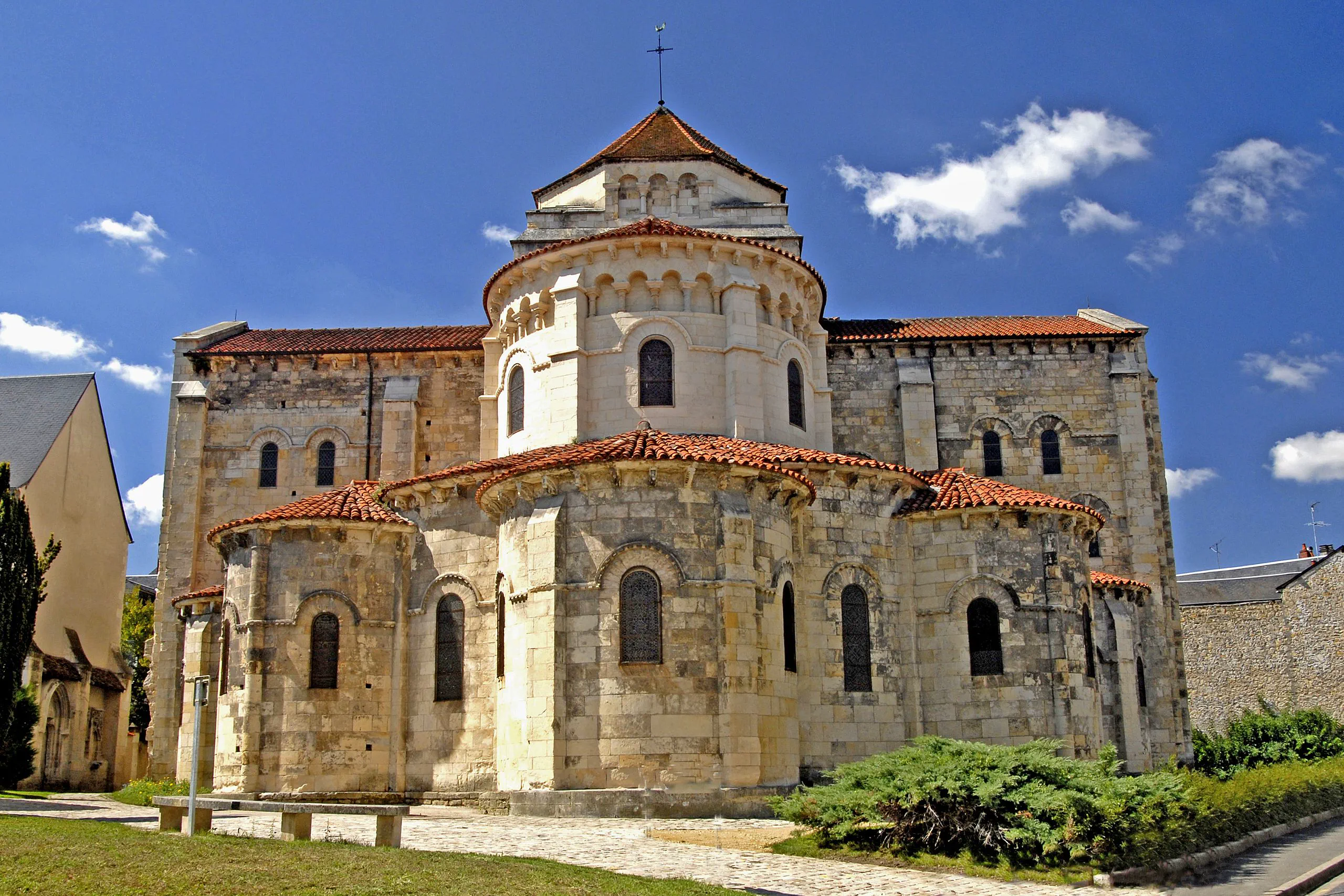
By Jochen Jahnke, CC BY-SA 3.0
Gothic: The Conquest of the Sky
Everything changed in the 12th century. Architects discovered how to support thinner walls, how to open large windows without the building collapsing. The pointed, broken arch allowed weight to be transferred to specific points. Ribbed vaults distributed forces. Flying buttresses, those half-arches visible on the exterior, supported the walls from outside.
The result radically changed the experience. Gothic cathedrals rise toward the sky, sometimes reaching forty meters in height. Windows invade the walls and fill with colored stained glass. Light is no longer rationed but multiplied, transformed into a palette of colors that tell the Bible to the illiterate.
Look up in a Gothic cathedral: your gaze naturally climbs along the slender columns to the vaults. You feel this sensation of elevation, this aspiration upward that defines the style. Architects wanted to translate into stone the ascent toward God.
Notre-Dame Cathedral in Chartres remains the absolute example. Its 13th-century stained glass floods the nave with a unique blue light. Its proportions are dizzying. This is Gothic in its most accomplished version.
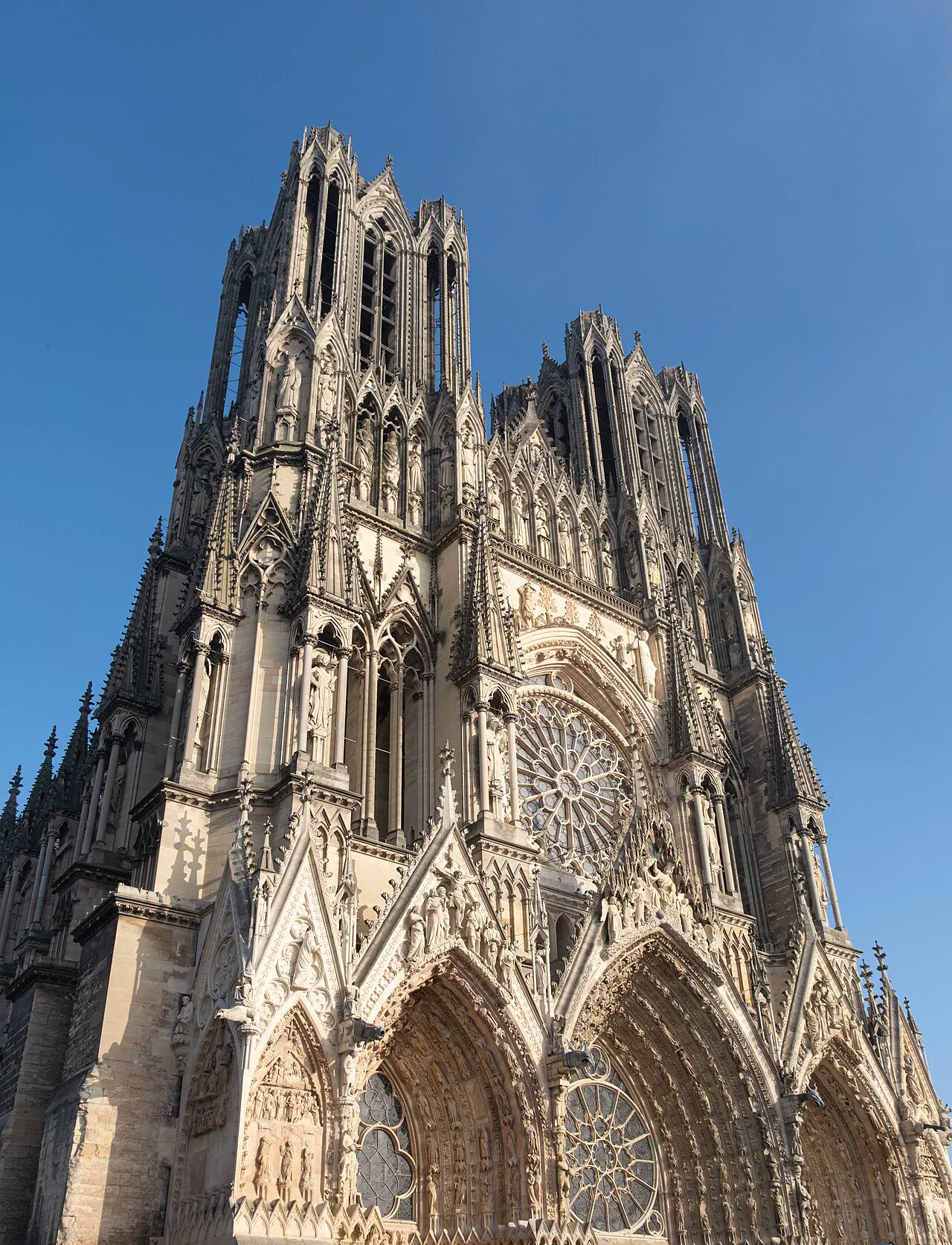
By Balise42 — Own work, CC BY-SA 4.0
Neo-Gothic: Nostalgia for the Middle Ages
The 19th century fell in love with the Middle Ages. Romantics idealized this period, architects wanted to revive it. Neo-Gothic adopted the codes of medieval Gothic but with modern techniques: iron, cast iron, cement. The result resembles the past while being resolutely 19th century.
How to tell the difference? Neo-Gothic churches display an almost too perfect regularity. Stones are cut with a precision that the Middle Ages didn’t know. Decorations follow repetitive, symmetrical, calculated patterns. Time hasn’t yet patinated the facades. The irregularities, additions, and repairs that give genuine Gothic cathedrals their personality are missing here.
Look at the technical details. Metal sometimes appears in the structure. Vaults may be made of plaster rather than stone. The whole remains more decorative than structural, even if the illusion works well from a distance.
The Basilica of Sainte-Clotilde in Paris shows this style in all its rigor. Built between 1846 and 1857, it imitates 13th-century Gothic with thoroughly modern precision. Its two spires point toward the Parisian sky like a direct homage to Notre-Dame.
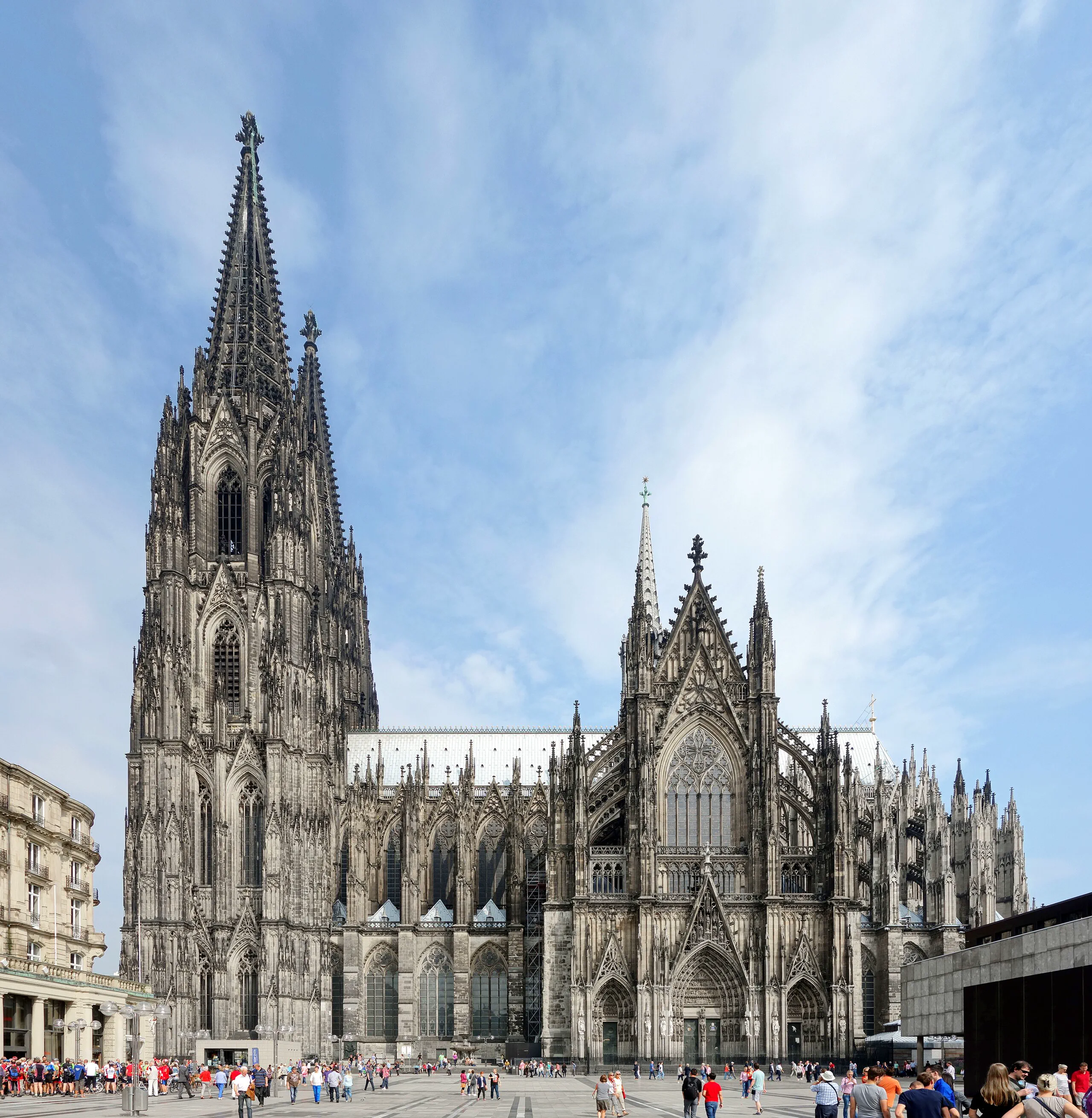
By Velvet — Own work, CC BY-SA 4.0
Neo-Byzantine: The Eastern Empire Revisited
At the same time, other architects turned toward Constantinople and the Byzantine empire. The neo-Byzantine style favors round volumes, imposing domes, and luxuriant decorations. It’s an architecture of accumulation, visual richness, and sacred spectacle.
The dome dominates everything. It stands out from the exterior, often multiple, sometimes crowned with a golden cross. Inside, it creates a central space that envelops the visitor rather than elevating them upward like Gothic. Floor plans often adopt the Greek cross, with four equal branches.
The explosion comes from the décor. Walls are covered with mosaics, colored marbles, and gilding. Domes receive frescoes or mosaics representing Christ Pantocrator, the Almighty Christ. Light enters through windows pierced at the base of the domes and makes all these precious materials shine.
The contrast with the exterior always strikes. The facade can remain sober, almost austere, then the interior overwhelms you with colors and brilliance. It’s an architecture that keeps its treasures for those who cross the threshold.
The Sacré-Cœur of Montmartre mixes Romano-Byzantine inspirations with a strong political dimension. Built after the defeat of 1870, it affirms Catholic presence in a Paris becoming increasingly secular. Its white domes dominate the capital from the hilltop.
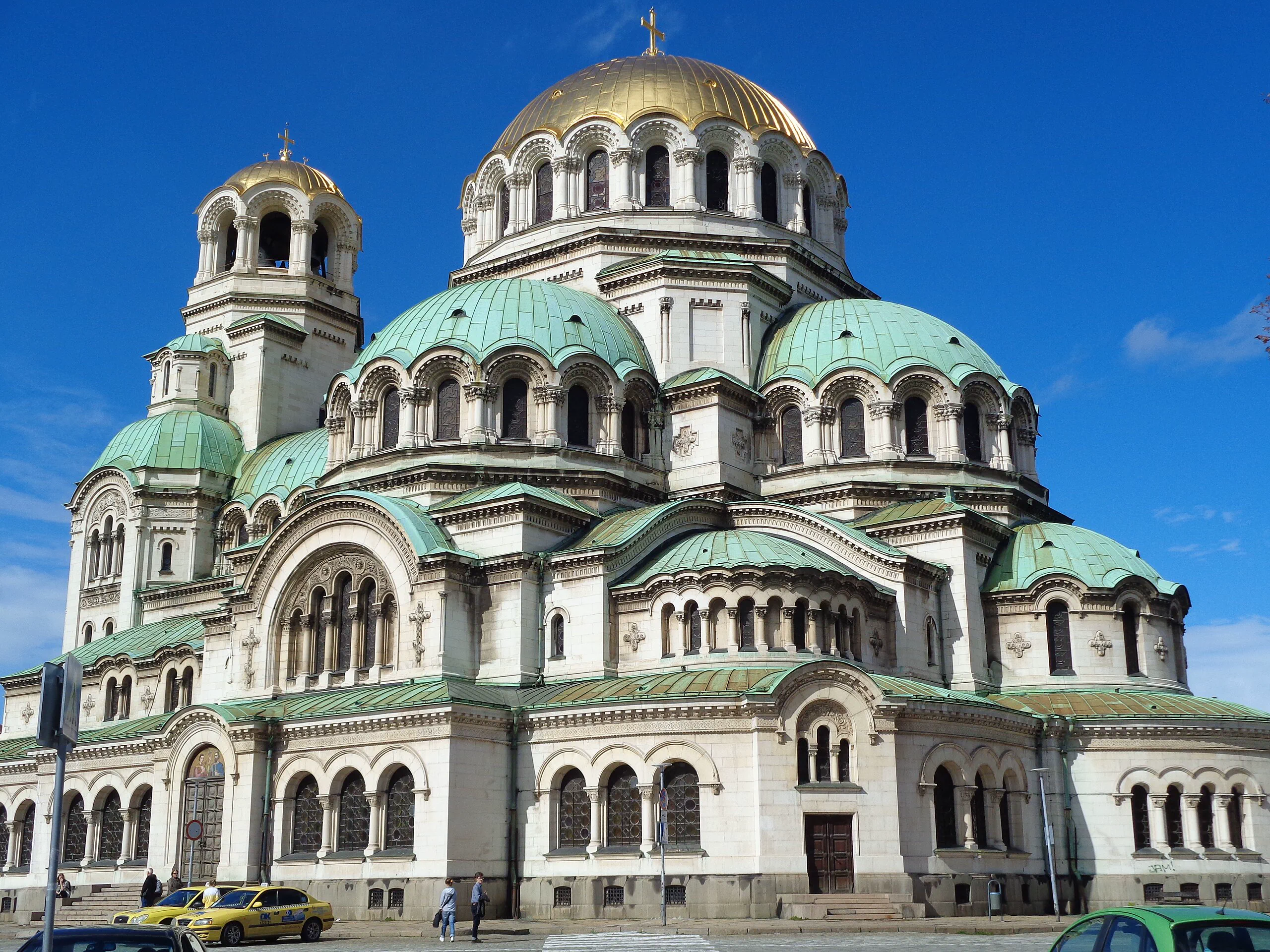
By Лили Маркова — Own work, CC BY-SA 4.0
Classicism: The Return to Ancient Order
The 17th and 18th centuries preferred reason to emotion, measure to exuberance. Classicism drew directly from Greco-Roman Antiquity. Columns, triangular pediments, proportions calculated to the millimeter: everything refers to Greek temples and Roman basilicas.
Symmetry reigns as absolute master. Count the columns on one side of the facade, you’ll find as many on the other. Draw a central axis, everything mirrors on either side. Floor plans become readable at a glance, often in a very regular Latin cross or perfect rectangle.
The décor remains measured. No overload, no multiplication of ornaments. Each element plays a precise role in the general harmony. Colors are often limited to white, light stone, and some discreet gilding. Light enters generously through large windows but without the colored play of Gothic stained glass.
This architecture reflects a worldview. Classicism believes in human reason, in man’s capacity to order the universe according to mathematical laws. Absolute kings, Louis XIV at their head, used this style to affirm their power: a king who controls even the proportions of buildings controls the world.
The Church of La Madeleine in Paris pushes the logic to the extreme. Built like an ancient Greek temple, with its peristyle of Corinthian columns, it resembles no other French church. Napoleon first wanted to make it a temple to the glory of the Grande Armée. The building ended up as a church but keeps its pagan temple appearance.
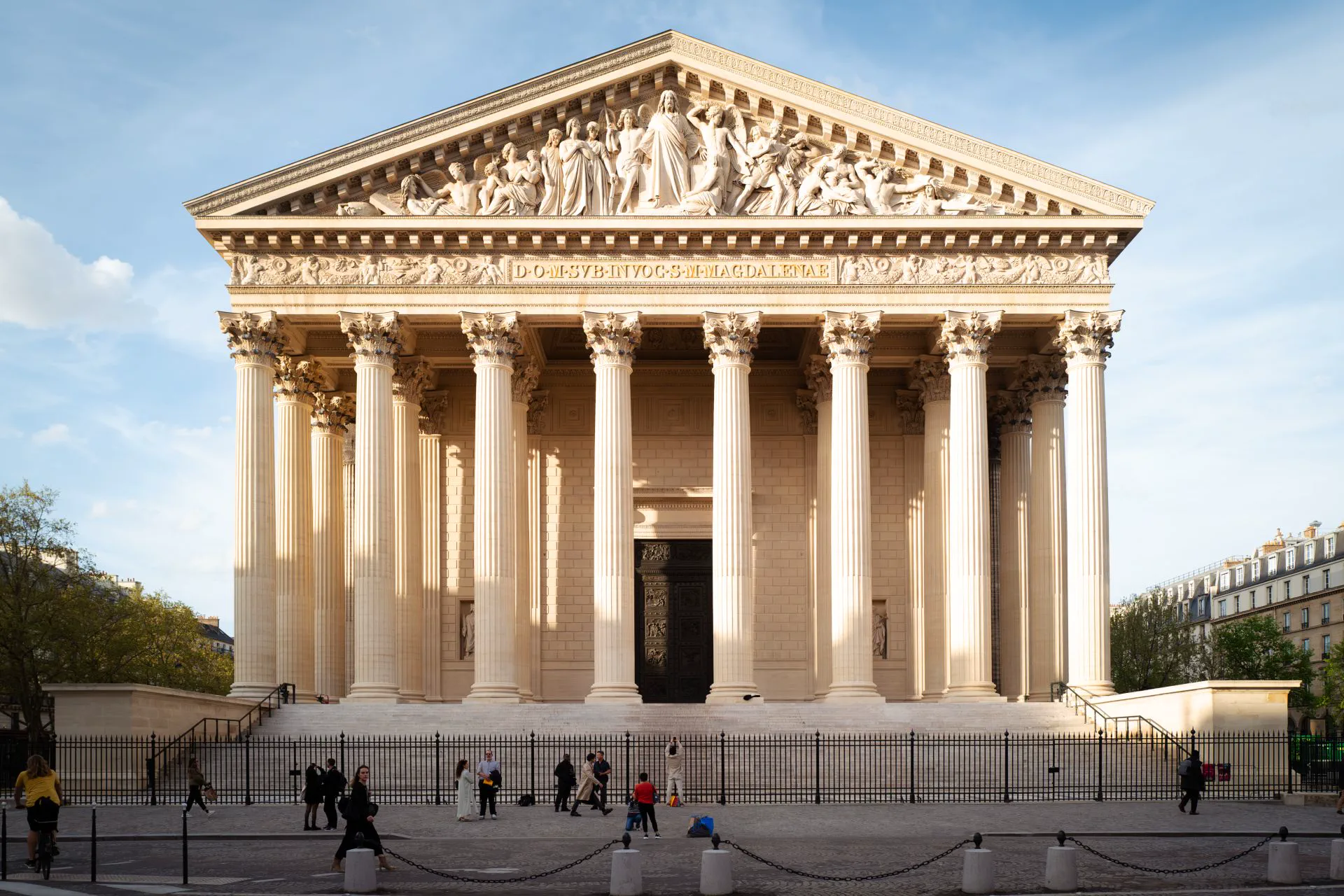
By Callaway Kosine — de Suzannet
Reading a Church in Three Glances
You enter an unfamiliar church. First look at the arches: are they round or pointed? A round arch points you toward Romanesque or Classical, a pointed arch toward Gothic or neo-Gothic. Next, observe the light: does it come from small openings or large bay windows? Finally, look up: does the space pull you upward or envelop you?
These three clues are generally enough to identify the dominant style. Also look at the proportions. Romanesque crushes, Gothic elevates, Classical balances, Byzantine envelops. Each architecture creates a different physical experience.
Beware of mixtures. Many churches were built over several centuries. A Romanesque nave can receive a Gothic choir. A Classical facade can hide a Baroque interior. These superimpositions tell the history of the place, its transformations, sometimes its destructions and reconstructions. Don’t necessarily seek stylistic purity, rather try to understand how the eras succeeded one another.
Now you have the keys. It’s up to you to push open the doors and read history in the stone. Each church becomes an open book, each style a language to decipher. France’s religious heritage counts thousands of buildings that are just waiting for us to take the time to truly look at them.